



Understanding the RESP education savings plan in Canada
Table of Contents
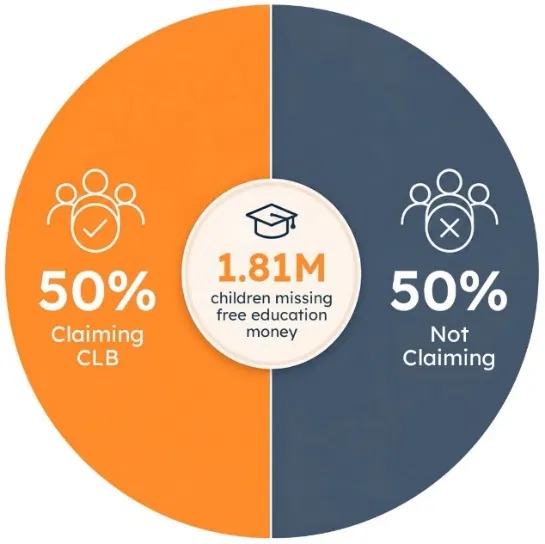
Approximately 1.8 million children may be eligible for education savings grants provided through the Canada Learning Bond that remain unclaimed. And that’s just one piece of the picture. Despite years of outreach efforts, 50% of eligible recipients are still not accessing the CLB, leaving hundreds of millions of dollars sitting uncollected in government coffers each year. Meanwhile, for families who are saving in a RESP Education Savings Plan, a surprisingly common mistake is missing the critical contribution window before a child turns 15 means the government’s matching grant quietly disappears at age 17, often without warning. Whether your child is a toddler or already in high school, understanding RESP contribution and grant rules can help families maximize available education savings incentives and avoid missing potential benefits.
This guide explains exactly how the RESP Education Savings Plan works, what government grants are available, how withdrawals are taxed, and how thoughtful investment choices, which may include exposure to private real estate where appropriate, can form part of a long-term investment strategy.
How Does an RESP Education Savings Plan Work?
A Registered Education Savings Plan (RESP) is a tax-advantaged savings account designed specifically to help Canadian families save for post-secondary education. The Canadian government administers the program, and contributions grow completely tax-free inside the plan. When funds are eventually withdrawn for education, they are taxed in the student’s hands not the contributor’s which is one of the plan’s most powerful advantages.
Here’s a simplified breakdown of how a RESP works:
- A subscriber (usually a parent or grandparent) opens the RESP and makes contributions.
- The government deposits grants (like the CESG and CLB) directly into the account based on eligibility.
- Funds are invested and grow tax-free inside the plan.
- When the beneficiary (the student) enrolls in a qualifying post-secondary program, Educational Assistance Payments (EAPs) are taxed in the student’s hands at their (typically very low) income level.
- Original contributions can always be returned to the subscriber tax-free.
RESP Contribution Limits: What You Need To Know
Understanding RESP contribution limits is essential before putting money into the plan.
Lifetime Contribution Limit: The lifetime maximum RESP contribution per beneficiary is $50,000. This limit applies across all RESPs open for a single child. If you over-contribute, you’ll face a 1% per month penalty tax on the excess amount until it’s withdrawn.
Annual Contribution Limit: Unlike TFSAs or RRSPs, there is no annual RESP contribution limit. You can contribute as much or as little as you want each year, if you don’t exceed the $50,000 lifetime cap.
RESP Contribution Deadline: There is no annual contribution deadline per se (unlike RRSP season), but to receive the Canada Education Savings Grant (CESG) for a given year, contributions must be made by December 31 of that calendar year. This is especially critical for children turning 17, as discussed below.
Government Grants: The Core Benefit of the RESP Education Savings Plan
Canada Education Savings Grant (CESG)
The CESG is the cornerstone of RESP savings. Here’s how it works:
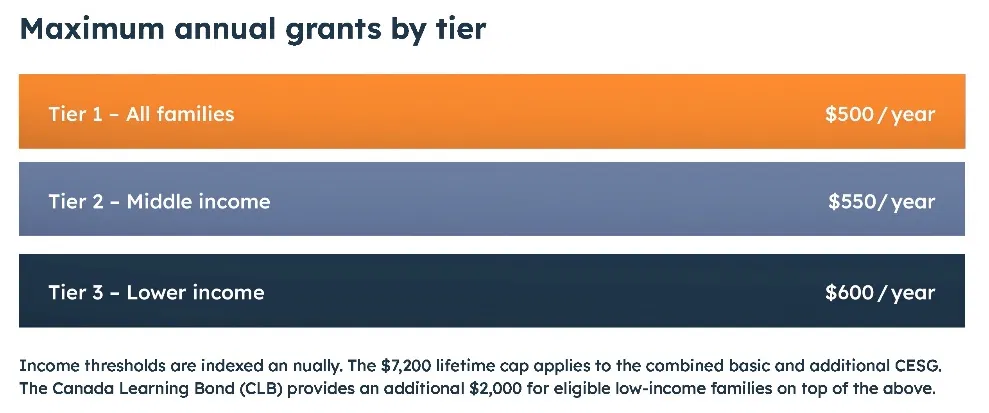
- The federal government contributes 20% on the first $2,500 contributed annually per beneficiary
- This means the maximum annual CESG is $500.
- The lifetime maximum CESG per beneficiary is $7,200
- Low- and middle-income families may qualify for an additional CESG an extra 10% or 20% on the first $500 contributed annually, depending on adjusted family net income
If you miss a year and don’t contribute the full $2,500, the unused CESG room carries forward. In a catch-up year, you can contribute up to $5,000 and receive up to $1,000 in CESG double the usual annual amount.
Canada Learning Bond (CLB)
The Canada Learning Bond is a grant designed specifically for children from lower-income families. No personal RESP contributions are required to receive it. Here’s how it works:
- An initial payment of $500 is deposited in the first year of eligibility
- An additional $100 per year is deposited for each subsequent year of eligibility, up to age 15
- The lifetime maximum CLB is $2,000 per beneficiary
- Children born in 2004 or later from qualifying low-income families are eligible
Importantly, if a child qualifies for the CLB but there is no RESP open, young adults can open their own RESP and claim the CLB up until the day before they turn 21. This is a missed opportunity for many Canadian families.
Provincial Grants
Depending on where you live, your child may also qualify for provincial education savings incentives:
- B.C. Training and Education Savings Grant (BCTESG): A one-time $1,200 payment for eligible B.C. residents
- Quebec Education Savings Incentive (QESI): A refundable tax credit with a lifetime maximum of $3,600
Combined, government grants can add up to $9,200 or more in free money toward your child’s education but only if contributions start early enough.
Related:
- Types of Investment Accounts in Canada: The Blindspot
- Unlock the Power of Canada’s Registered Accounts
RESP Contributions After Age 17: The Rules That Catch Families Off Guard
This is one of the most misunderstood aspects of RESP planning. Let’s be very clear:
You can still contribute to RESP after your child turns 17 and even after they turn 18. Contributions are permitted until the beneficiary turns 31 years old, and the RESP itself can remain open for up to 35 years.
However, there is a critical cutoff that affects government grants.
When Do RESP Grants Stop?
The Canada Education Savings Grant (CESG) stops at the end of the calendar year in which the child turns 17. After that age, contributions to the plan no longer attract the CESG match, even if there is unused grant room from prior years.
This means if your child turns 17 in February 2026, you have until December 31, 2026, to make RESP contributions and qualify for that year’s CESG. After that date, no further CESG will be deposited, regardless of how much you contribute.
Why Starting Early Changes Everything
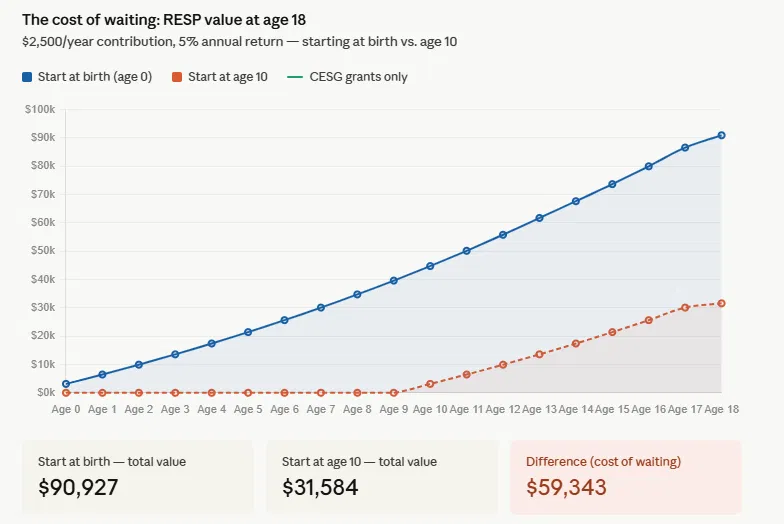
Starting early with an RESP doesn’t just give you more time, it multiplies the value of every dollar through both compounding growth and years of government grants. By contributing consistently from a young age, you maximize the full $7,200 CESG and potential $2,000 CLB while giving investments more time to grow tax-free, which may materially increase the value of education savings over time. Waiting even a few years reduces both your grant eligibility window and your compounding runway making early action one of the highest-impact decisions you can make.
RESP Withdrawal Rules: How and When to Access Your Funds
Once your child graduates from high school and enrolls in a qualifying post-secondary institution including college, university, trade school, apprenticeship programs, or even certain online programs you can begin withdrawing from the RESP.
Two Types of RESP Withdrawals
1. Post-Secondary Education Withdrawals (PSE)
These are withdrawals of your original contributions. Since you already paid tax on these dollars before contributing, they come back out completely tax-free anytime, in any amount, with no restrictions on how they’re used.
2. Educational Assistance Payments (EAPs)
EAPs consist of government grants and investment growth. These are taxable in the students’ hands at their marginal tax rate. Since most students earn very little income, they often pay little to no tax on these withdrawals.
EAP Withdrawal Limits
During the first 13 consecutive weeks of enrollment in a qualifying program, EAP withdrawals are capped at:
- $8,000 for full-time students
- $4,000 for part-time students
After 13 weeks, there is technically no annual limit on EAP withdrawals, though the CRA has a yearly threshold (currently approximately $28,000) below which it won’t question the reasonableness of expenses. Acceptable expenses include tuition, books, rent, transportation, food, and basic personal needs.
Strategic Withdrawal Tip
For optimal tax efficiency, prioritize EAPs early in the student’s education. Grants that go unused cannot be taken back by the subscriber – they must be returned to the government. Drawing down the EAP portion first, while the student is in the lowest income bracket, ensures you keep the maximum value. Unused growth in the plan can eventually be withdrawn as an Accumulated Income Payment (AIP), but this is subject to the subscriber’s full marginal tax rate plus an additional 20% penalty.
Advantages of RESP: Why This Is Canada’s Best Education Savings Vehicle
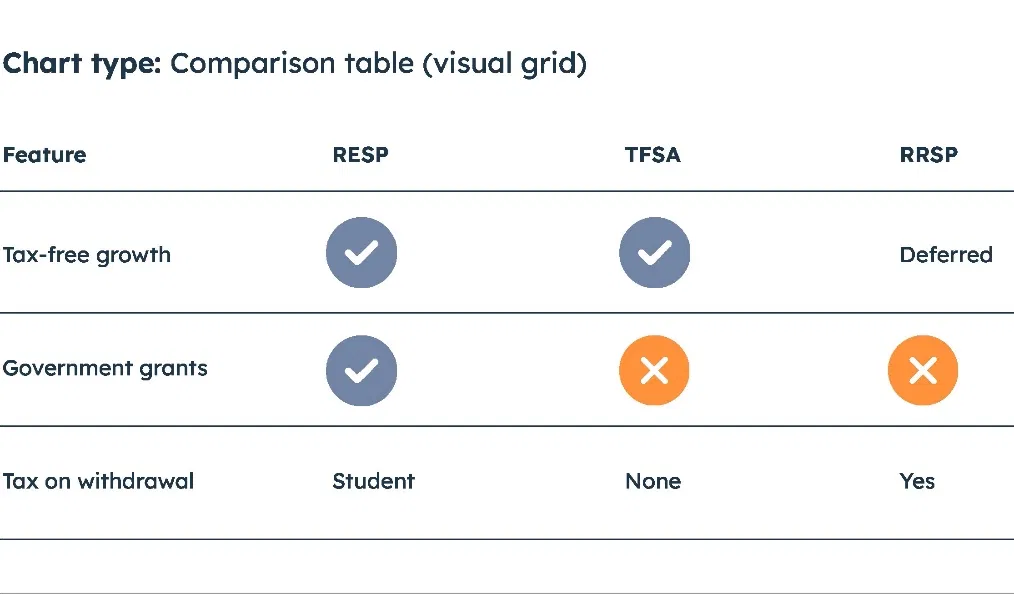
For families saving specifically for post-secondary education, the RESP offers several unique advantages, including government grants and tax-deferred growth.
Tax-Free Growth: Every dollar of investment return inside the plan compounds without triggering annual tax giving your savings a significant edge over a taxable investment account.
Government Matching: The CESG’s 20% automatic return on contributions up to $2,500 annually is unmatched in the investment world. The CESG can provide a significant contribution boost that is difficult to replicate through investment returns alone.
Income-Splitting Through the Beneficiary: Because EAPs are taxed in the student’s hands not the parent’s families with high household income can effectively shift taxable income to a lower-bracket family member.
Flexibility in Use: RESP funds aren’t just for four-year universities. Qualifying programs include community colleges, apprenticeships, trade schools, CEGEPs, and many distance-learning programs both within Canada and abroad.
Long Runway: The plan can remain open for 35 years, making it a powerful vehicle even for late starters or students who delay their education.
Transferability: Unused RESP funds can be transferred to a sibling, rolled into an RRSP (subject to contribution room), or donated to an educational institution offering multiple exit strategies if the original beneficiary doesn’t pursue post-secondary education.
Investment Options Inside Your RESP: The Case for Private Real Estate
Private real estate may provide an additional source of diversification for some investors and can be considered alongside traditional RESP investments such as ETFs, mutual funds, fixed-income securities, and GICs. Private real estate investments may be less liquid than publicly traded investments and may not be suitable for all investors. Returns are not guaranteed, and investment values can fluctuate.
A thoughtful RESP investment strategy might allocate differently depending on the child’s age: higher equity and alternative asset exposure in early years when the investment horizon is long, then gradually transitioning to more conservative holdings as the child approaches 17 and withdrawals get closer.
Note: This is general educational information, not tax or investment advice. Always consult a qualified financial advisor before making decisions about your RESP or investment portfolio.
Final Thoughts
An RESP remains one of the most effective ways to save for your child’s education in Canada. Government grants like the CESG and CLB give contributions an immediate boost, while investment selection is another important component of RESP planning. Depending on individual objectives, risk tolerance, and time horizon, investors may consider a range of qualified investments, including equities, fixed income, GICs, ETFs, mutual funds, and private real estate. Starting early, contributing consistently, and investing strategically are important considerations when using an RESP.
Consult with a qualified financial advisor to assess your individual situation and suggest the best plan to take full advantage of every available dollar.
*Equiton is a private real estate investment firm committed to making institutional-quality real estate investing accessible to everyday Canadians. This article is intended for general informational purposes only and does not constitute tax, legal, or investment advice. Please consult a qualified financial advisor for guidance specific to your situation.
Ready to Build a Smarter Retirement Plan?
Equiton helps everyday Canadians move beyond basic saving and build investment strategies designed for long-term growth. Whether you’re just getting started or looking to diversify an existing portfolio, our team works with you to understand how private real estate may fit within your broader investment approach.
From income-focused funds to diversified real estate exposure beyond public markets, Equiton’s professionally managed funds are designed to complement your broader investment portfolio subject to your individual suitability.
Connect with an investment advisor today to learn how private real estate can work alongside your broader retirement strategy to help you build lasting wealth with confidence.


Frequently Asked Questions
Yes. Contributions are allowed until the beneficiary turns 31. The account continues to grow tax deferred. You just won’t receive CESG on post-17 contributions.
It functions similarly to a tax-free investment account in that growth is sheltered from annual taxation. However, unlike TFSA, EAP withdrawals are taxable to the student (though usually at a very low rate). Original contributions always come out tax-free.
You have several options: transfer to a sibling’s RESP, roll up to $50,000 of accumulated income into your RRSP (if you have room), or close the plan. Grants must be returned, and accumulated income becomes subject to your marginal tax rate plus a 20% penalty if withdrawn as an AIP.
December 31 of each year. For children turning 17, this is the final deadline to receive the CESG.
RESPs allow a range of qualified investments beyond mutual funds, GICs, and ETFs, including private real estate held through pooled funds. Any income or growth generated within an RESP can benefit from tax-deferred compounding. However, investment outcomes will vary based on market conditions, investment performance, fees, and the timing of contributions and withdrawals. As with any investment decision, it’s worth speaking with a qualified financial advisor to determine what’s appropriate for your individual situation.
*Not to be construed as tax advice. For specific tax advice, consult a tax professional.
Ready to Build a Smarter Retirement Plan?
Equiton helps everyday Canadians access institutional-quality private real estate investments. Whether you’re just getting started or looking to diversify an existing portfolio, our team works with you to understand how private real estate may fit within your broader investment approach.
From income-focused funds to diversified real estate exposure beyond public markets, Equiton’s professionally managed funds are designed to complement your broader investment portfolio subject to your individual suitability.
Connect with an investment advisor today to learn how private real estate can work alongside your broader retirement strategy to help you build lasting wealth with confidence.
Frequently Asked Questions
Retirement planning is a strategic approach to managing your money that combines budgeting, investing, tax planning, and retirement strategies. Working with a qualified financial planner, such as a Certified Financial Planner (CFP), can help you see how everything connects and works toward your goals. Equiton specialists can speak to how private real estate investments may fit within your broader financial picture, but for comprehensive retirement planning we recommend working with a qualified professional.
The answer is both. Saving is essential for short-term security, while investing helps your money grow over time to meet long-term financial goals. The key is balance: knowing when to keep money accessible and when to put it to work in something like a TFSA or a private real estate fund. Getting that balance right is where a solid plan makes a real difference. Equiton can help you figure out what that looks like for your situation.
A non-registered investment account is ideal once you’ve maxed your TFSA and RRSP contributions. It offers full investment flexibility, letting you build wealth through stocks, ETFs, or private real estate investment. The main thing to be mindful of is taxes, since gains here aren’t sheltered. With the right strategy, though, you can still grow meaningful wealth and generate passive income while keeping your tax bill in check.
A TFSA is one of the most flexible tools Canadians have that let’s your investments grow inside it completely tax-free, including withdrawals. You can hold a wide range of investments in it, from ETFs to private real estate funds, and it won’t affect your government benefits in retirement. Used consistently over time, it can make a significant difference in how much you keep when you stop working.
Private real estate investment may offer Canadians to earn without managing properties themselves. Your capital can grow over time while the income flows in, and it fits naturally alongside your TFSA, RRSP, and non-registered accounts as part of a broader strategy. By including private real estate, you can protect your retirement and create multiple income streams. Speak with an Equiton specialist to see how private real estate investment can strengthen your retirement plan.
*Not to be construed as tax advice. For specific tax advice, consult a tax professional.


